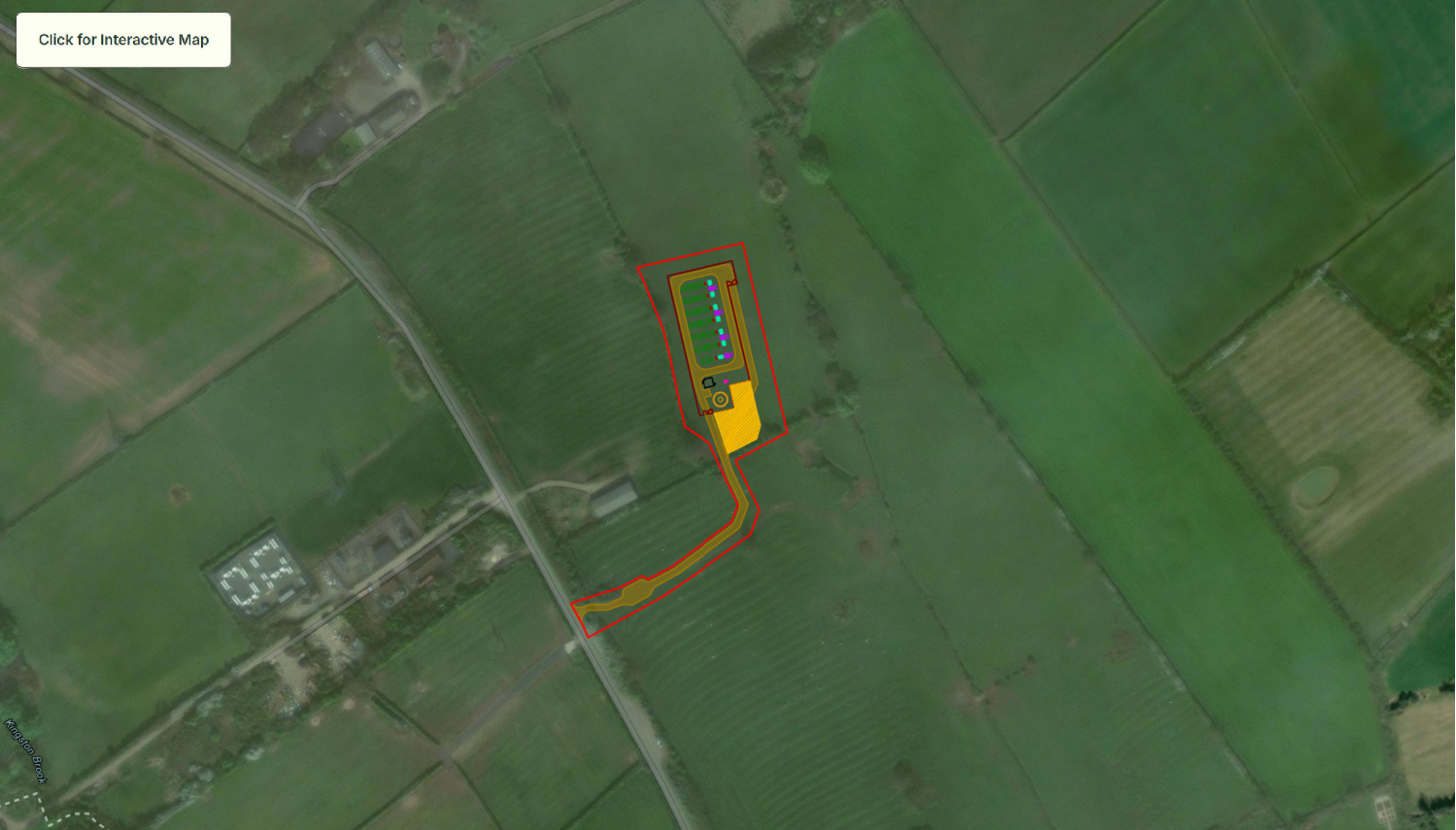
The development covers approximately 1.2 hectares and has consent for a 40-year operational period. At the end of this period, the land will be returned to agricultural use.
The project has been designed to make efficient use of the available grid capacity in the area while responding to local environmental, landscape, heritage, ecological, drainage and highway considerations assessed through the planning process.
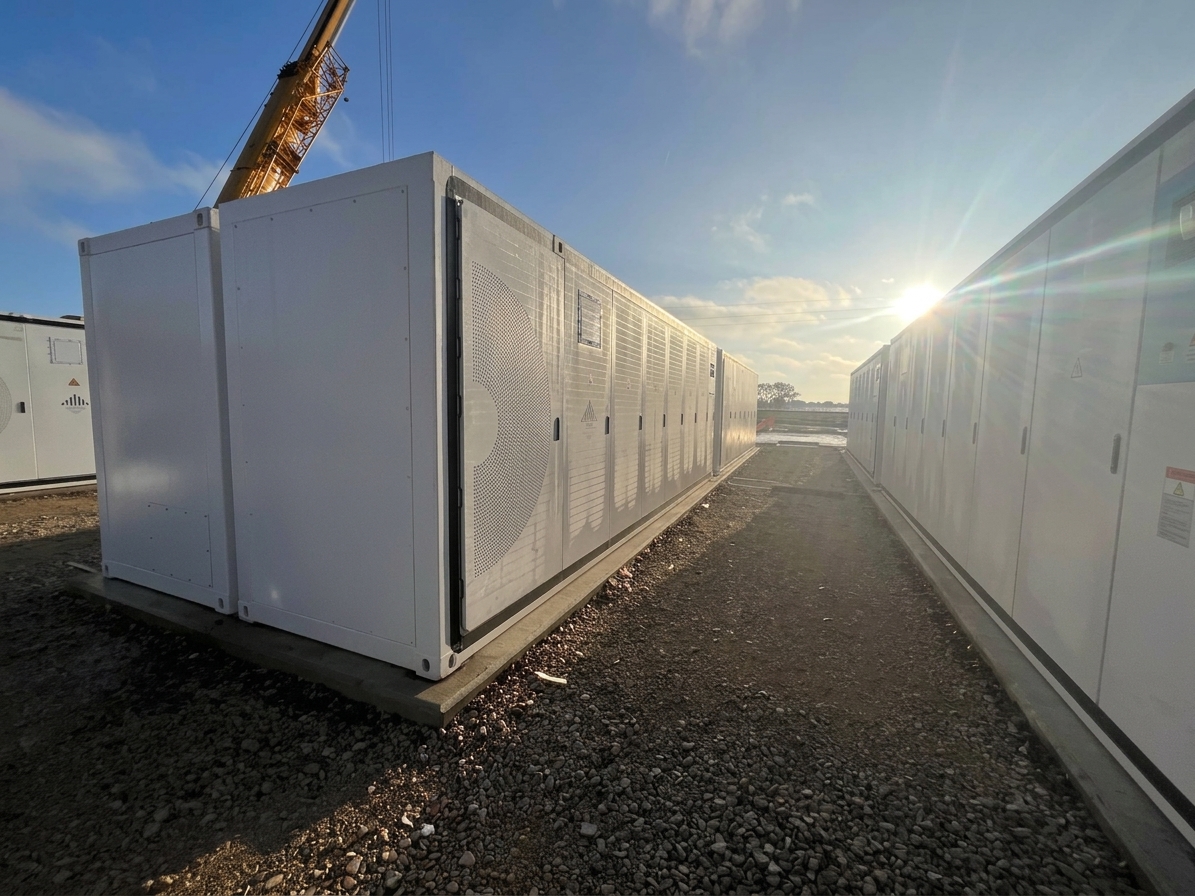
The scheme includes batteries, electrical equipment, internal access tracks, underground cabling, landscaping, ecological enhancement areas and a connection to the local electricity network via the Willoughby substation.

Public consultation undertaken and feedback inputted into the design.
Planning application submitted to the local planning authority.
Planning permission granted. Detailed design, conditions discharge and tender underway
Link to planning documents**
Construction stage from enabling works, civil works, battery
installation to testing and commissioning.
Project energised and operating.

The UK government passed laws to end the UK's contribution to global warming by 2050, making it the first major economy to do so. This means that by 2050, the UK’s greenhouse gas emissions will be carbon neutral, improving the environment for current and future generations.
Battery energy storage systems help support a cleaner, more flexible and more secure electricity network. They store electricity when generation is high and release it back to the grid when demand is greater, helping to balance supply and demand and make better use of renewable energy.
This proposal supports the UK’s commitment by delivering renewable energy benefiting the local and wider community now, and for generations to come.